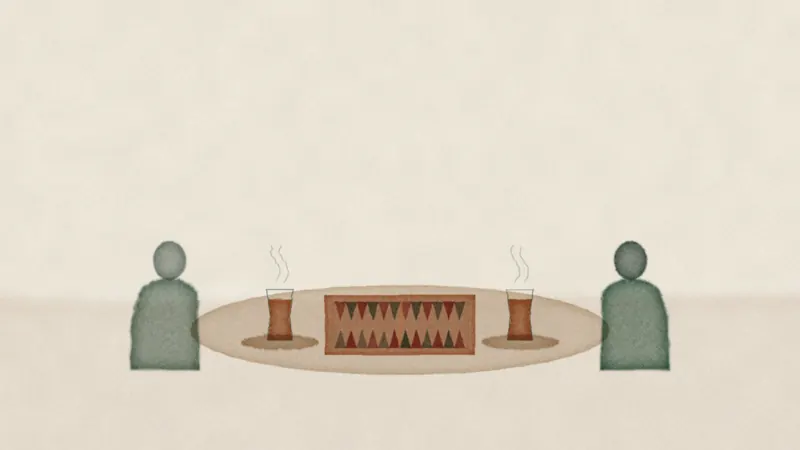
When providing for everyone leaves little room to talk

You get home from a long shift, pull into the driveway and don't go in. Not yet. For ten minutes you just sit there, engine off, before anyone can ask you for anything. Inside, there's a rent increase to discuss. On the phone, your brother needs help with your parents' medical bills in Iran. You can't remember the last time someone asked about your day and actually waited for the answer.
Many Iranian men abroad carry heavy financial responsibility: for a partner and children, for parents back home, sometimes for siblings or extended family. Being dependable is often a source of real pride. But the pressure can be relentless, and men are often less likely than women to talk about stress or seek help [1]. Over time, unspoken strain can show up as irritability, sleep problems, headaches, withdrawal or low mood [2][3].
Wanting support doesn't mean you're failing
You can value being the one people rely on and still want someone to know what it costs you to keep things going. Needing to talk isn't weakness; it's part of staying well enough to keep providing.
Choose a listener who won't make it about money
Pick someone who can listen without immediately turning the conversation into a financial decision. That might be a friend, a brother, a colleague, a faith leader, or someone in a men's group, rather than the people whose bills you're paying.
Start with an ordinary moment
Big statements like “I'm not coping” can be hard to say. Start with something small and true:
- “I sat in the driveway for ten minutes yesterday because I needed a break before anyone asked me for anything.”
- “I haven't slept properly since the rent went up.”
- “Every call home is about money now.”
Specific details make it easier for someone to understand, and to respond.
Say what kind of support you want
People often jump to advice when what you want is company. Tell them:
- “I don't need solutions. I just want someone to know.”
- “Could you help me think through one decision?”
- “Can we talk properly another time? I just wanted to say it out loud.”

Being specific makes it easier for someone to show up alongside you.
Share the load where you can
If the financial pressure involves family in Iran, it may help to talk openly with siblings or your partner about what's sustainable, rather than carrying it alone. Our article on setting boundaries when family asks for money has practical steps.
When stress becomes something more
If you notice persistent irritability, anger, drinking more, trouble sleeping, losing interest in things, or thoughts that your family would be better off without you, please talk to a doctor or counselor. These can be signs of depression, which in men often looks different from sadness [2]. If you're thinking about suicide, in the US and Canada call or text 988; in the UK and Ireland, call Samaritans on 116 123; elsewhere, contact local emergency services. See our support resources page.
Questions people often ask
Why is it so hard for men to ask for help?
Many men grow up learning that self-reliance means handling things alone. Research shows these expectations can make help-seeking harder [1]. Starting small, with one trusted person, often helps.
How do I talk to my partner about money stress without worrying them?
Be honest but specific, share what you're planning to do, and invite them in as a partner rather than someone to protect. Our article on talking about money at home may help.
What does depression look like in men?
It can show up as anger, irritability, fatigue, physical pain, risk-taking or withdrawal, not only sadness [2].
Talk with other men who carry similar loads
White Circle's Men's Circle is a confidential space where Iranian men abroad talk about pressure, family and life. Explore our circles.
References
About this article. Written by the White Circle editorial team, which runs peer support groups for Iranians abroad on anxiety, low mood, relationships, divorce, grief and more. Last updated November 25, 2026. We link the research and health guidance we rely on in the references below.
This article shares general information and lived-experience perspectives. It is not medical advice, diagnosis or treatment, and peer support is not a substitute for care from a licensed professional.
Related support groups: