Feeling at home in two places without having to choose
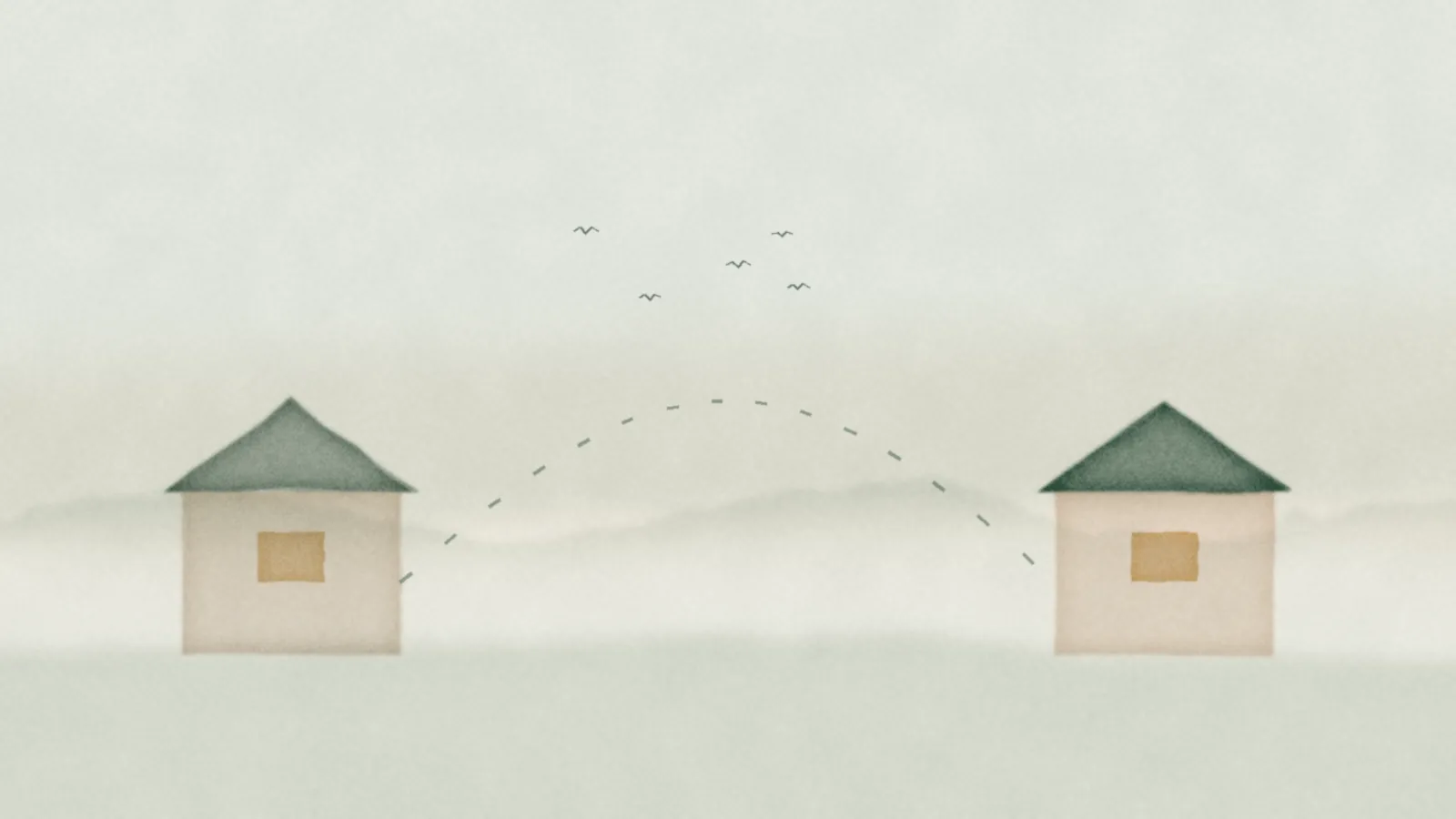
On the plane to Tehran you tell the person next to you that you're “going home.” Three weeks later, on the flight back, you say the same thing about your apartment. Both times, it's true. One place holds the people who remember you as a child. The other holds the neighbour who waters your plants when you travel, and the café owner who knows your order.
Many immigrants feel they're expected to choose: Are you more Iranian or more Canadian? Which place do you really love? But belonging doesn't have to be one or the other. Research on migration suggests that people who maintain connections to their heritage culture while building ties in their new country often adjust well [1]. Feeling at home in two places, sometimes fully and sometimes not quite in either, is a common and legitimate way to live.
Describe home without naming a country
Try finishing this sentence several times, without mentioning a place:
“I feel at home when…”
- “…someone pours me tea without asking.”
- “…I can walk somewhere without a map.”
- “…people laugh at my jokes in Persian.”
- “…my neighbour waves from the window.”
Your answers may reveal that home is less about a location and more about familiarity, being known, ease and connection. That makes it something you can build in more than one place.
Answer the “which one” question with stories
If a relative asks which place you love more, you don't need to pick. Tell them something you miss when you leave each one: the smell of bread at the corner bakery in Isfahan, and the quiet morning walk by the river here. Specific memories are more honest, and usually more welcome, than rankings.
Build a bridge that belongs to you
You can carry pieces of each place into the other:
- cook your aunt's adas polo (lentil rice) for a friend who has only known you here,
- bring a favourite local snack back to your cousins in Iran,
- teach a colleague a Persian phrase, or learn a local tradition and share it with family,
- celebrate Nowruz and a local holiday with the same group of friends.
Belonging grows through what you share across places. Connections with neighbours and community where you live also matter for wellbeing [2].
Accept the in-between days
Some days you may feel like a stranger in both places: out of step with news at home, still learning customs here. That's part of living between cultures, not a failure. It often eases with time, and many people come to see the in-between as a strength, a perspective that people in one place alone don't have.
When not belonging hurts
If feeling out of place leads to persistent loneliness, sadness or withdrawal, please talk to someone. Isolation affects health, and support helps. See our support resources page.
Questions people often ask
Is it normal not to feel at home anywhere after immigrating?
Yes, especially in the first years. Many immigrants describe feeling “in between.” A sense of home often grows gradually through relationships and routines.
Will my children feel Iranian?
Children often develop their own mix of identities. Sharing stories, food, language and celebrations gives them the chance to feel connected, in their own way. Our article on Nowruz with kids abroad has ideas.
How do I answer “Where are you from?”
However feels right that day. A short answer like “I grew up in Iran and live here now” is enough.
Belong somewhere together
White Circle's Immigration & Cultural Adjustment and Belonging Circle groups bring together Iranians abroad who are building homes in more than one place. Explore our circles.
References
About this article. Written by the White Circle editorial team, which runs peer support groups for Iranians abroad on anxiety, low mood, relationships, divorce, grief and more. Last updated November 25, 2026. We link the research and health guidance we rely on in the references below.
This article shares general information and lived-experience perspectives. It is not medical advice, diagnosis or treatment, and peer support is not a substitute for care from a licensed professional.
Related support groups: