Low mood or depression? What to discuss with a clinician
You can have good reasons to feel low and still need someone to look more closely at how you feel. A breakup, a loss, a hard year at work or missing home are natural reasons for sadness. Depression is something else: a health condition that can quietly settle in during a stressful period and make everything much harder.
The difficulty is that during a hard period, almost every sign of depression has an easy explanation. You are tired because of work. You don’t enjoy things because you have no time for friends. You can’t concentrate because there is too much on your mind. Some of that may be true. This article is about noticing when it might be more than that.
Sadness, homesickness and depression can look alike
Ordinary sadness and missing home tend to come in waves. It hurts on certain days, such as Nowruz, a family birthday or when a familiar song plays, and then eases. You may still laugh at a cousin’s voice note, enjoy a good meal, and feel hopeful about parts of your life.
Depression tends to be more constant. According to the U.S. National Institute of Mental Health, common signs include a persistent sad, anxious or “empty” mood, losing interest or pleasure in hobbies and activities, fatigue, trouble sleeping or sleeping too much, changes in appetite, difficulty concentrating, and feelings of hopelessness or worthlessness [1]. When several of these last most of the day, nearly every day, for two weeks or more, it is worth talking to a professional [1][3].
Try a simple check-in with yourself
Specific moments tell you more than a general “I’m fine” or “I’m not fine.” Ask yourself:
- When a friend or cousin sent something funny, did you want to listen, or did you leave it unopened?
- When someone else cooked, did the food still taste good?
- Are you sleeping much more, or much less, than usual?
- Have you stopped doing things you used to look forward to, even small ones?
- Do you feel like a burden, or that things will never get better?
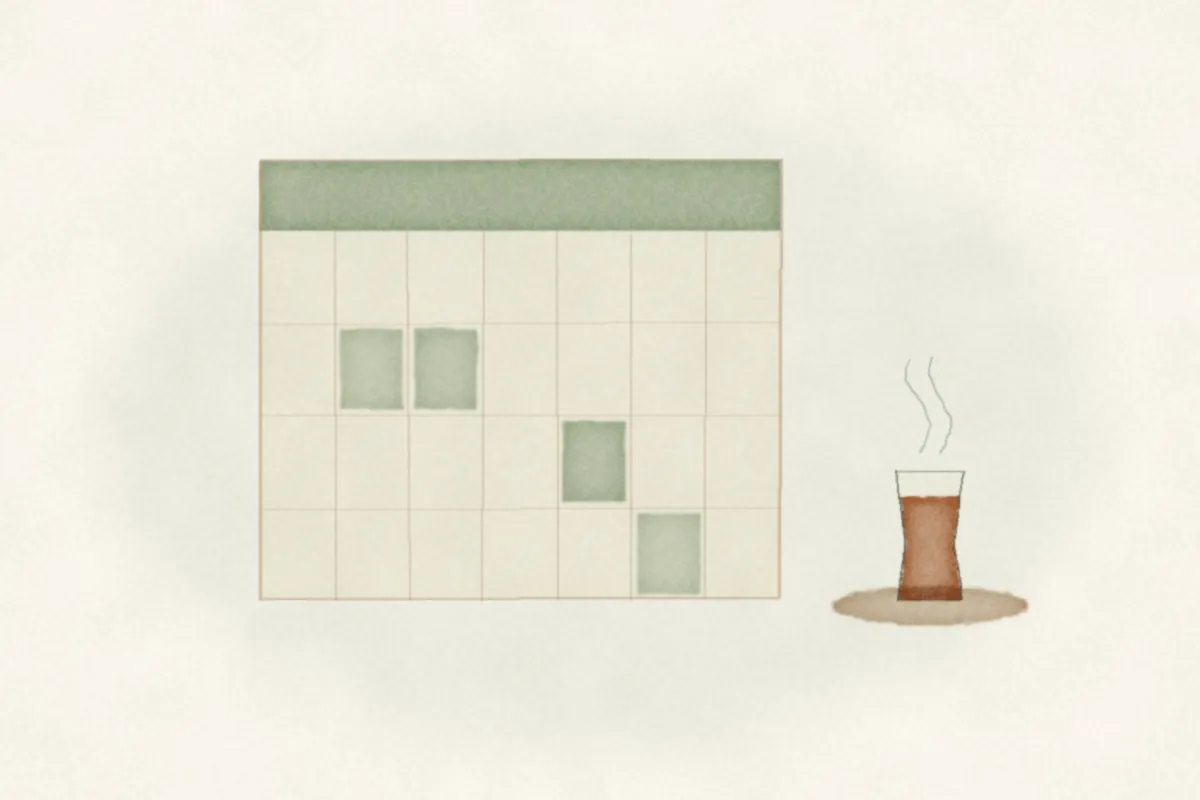
Write down what you notice for a week or two: how often you feel low, how long it lasts, and whether sleep, appetite or concentration have changed. These notes give you and a clinician somewhere concrete to start [2].
What can raise the risk
Long-running stress, loss, loneliness, money pressure, a relationship ending or caring for someone can all weigh on mood. Living abroad can add more: researchers describe acculturative stress, the strain of adapting to a new language and new rules while holding on to your own culture [4], alongside the loss of familiar support, uncertain legal status, work below your qualifications or worry about family in Iran. It is not surprising that mood can suffer. None of this means something is wrong with you. It means you are carrying a lot.
Some people also feel they are not allowed to be unhappy, because others “have it harder” or because they chose the life they have. That guilt can keep people silent for a long time. You are allowed to struggle and still be grateful for parts of your life.
You don’t need a diagnosis to ask for help
Many people wait until they are sure it is “real” depression before seeing anyone. You don’t need to arrive with a label. A clinician’s job is to explore what might be going on with you, including physical causes such as thyroid problems, anemia or side effects of medication, which can cause similar symptoms.
You can usually start with a family doctor or primary care clinic. In many countries you can ask for a professional interpreter, including Persian (Farsi), and some areas have Persian-speaking therapists. It is fine to ask, when booking, whether interpreting is available and whether there is a cost. Our guide on preparing for your first appointment walks through what to bring.
Reach out sooner if things are getting worse
You don’t have to wait two weeks if your mood is dropping quickly, you can’t manage daily tasks, or you are starting to feel hopeless. Earlier support is easier to start.
Small steps while you wait
These ideas do not replace care, but many people find them helpful alongside it:
- Keep one small routine, such as a short walk at the same time each day. Movement and daylight help some people feel a little steadier.
- Do one thing that used to matter to you, even in a smaller form: one song, one page, one phone call.
- Tell one person the truth. You don’t have to tell everyone. Our article on telling someone you’re struggling has words you can borrow.
- Be careful with alcohol, which can make low mood and sleep worse.
When to get urgent help
If you have thoughts of harming yourself or ending your life, please reach out right away. In the US and Canada, call or text 988. In the UK and Ireland, call Samaritans on 116 123. Elsewhere, call your local emergency number or go to the nearest emergency department. More options are on our support resources page.
Questions people often ask
Is it just a rough patch, or depression?
Low mood during a hard period is common, and many people feel better as things settle. But depression is a health condition, not just a phase. If symptoms last most days for two weeks or more, or affect your work, relationships or self-care, talk to a professional.
Can homesickness turn into depression?
Ongoing stress and isolation can increase the risk of depression for some people. If missing home has turned into a constant heaviness, loss of interest or hopelessness, that is a good reason to get checked.
Will seeing a doctor about my mood affect my visa or residency?
Rules differ by country. If you are worried, ask the clinic how your information is stored and shared before your appointment, or ask an immigration advisor. In many places, health records are confidential.
You don’t have to carry it alone
In White Circle’s Depression & Emotional Well-being circle, Iranians abroad talk openly about low mood, lost motivation and getting through hard seasons. Other groups meet around anxiety, relationships, divorce and grief. Peer support is not treatment, but it can make it easier to take the next step. You can find out how our circles work.
References
About this article. Written by the White Circle editorial team, which runs peer support groups for Iranians abroad on anxiety, low mood, relationships, divorce, grief and more. Last updated November 25, 2026. We link the research and health guidance we rely on in the references below.
This article shares general information and lived-experience perspectives. It is not medical advice, diagnosis or treatment, and peer support is not a substitute for care from a licensed professional.
Related support groups: