Staying close when your best friends live in other countries
For two years, you and your oldest friends had a standing Sunday call: one in Toronto, one in Berlin, one still in Tehran. It worked beautifully, until one had a baby, another started night shifts, and the call quietly stopped happening. You still think of them as your closest friends. But you can't remember the last time you really talked.
Friendships across countries face real obstacles: time zones, busy lives, different news cycles and the slow drift of living different daily realities. Research suggests that close friendships are built and maintained through time spent together [1], and distance makes that harder, not impossible. The friendship may still have room in both lives, just rarely in the same hour. The trick is to stop relying only on the one format that no longer fits.
Try a conversation that can wait
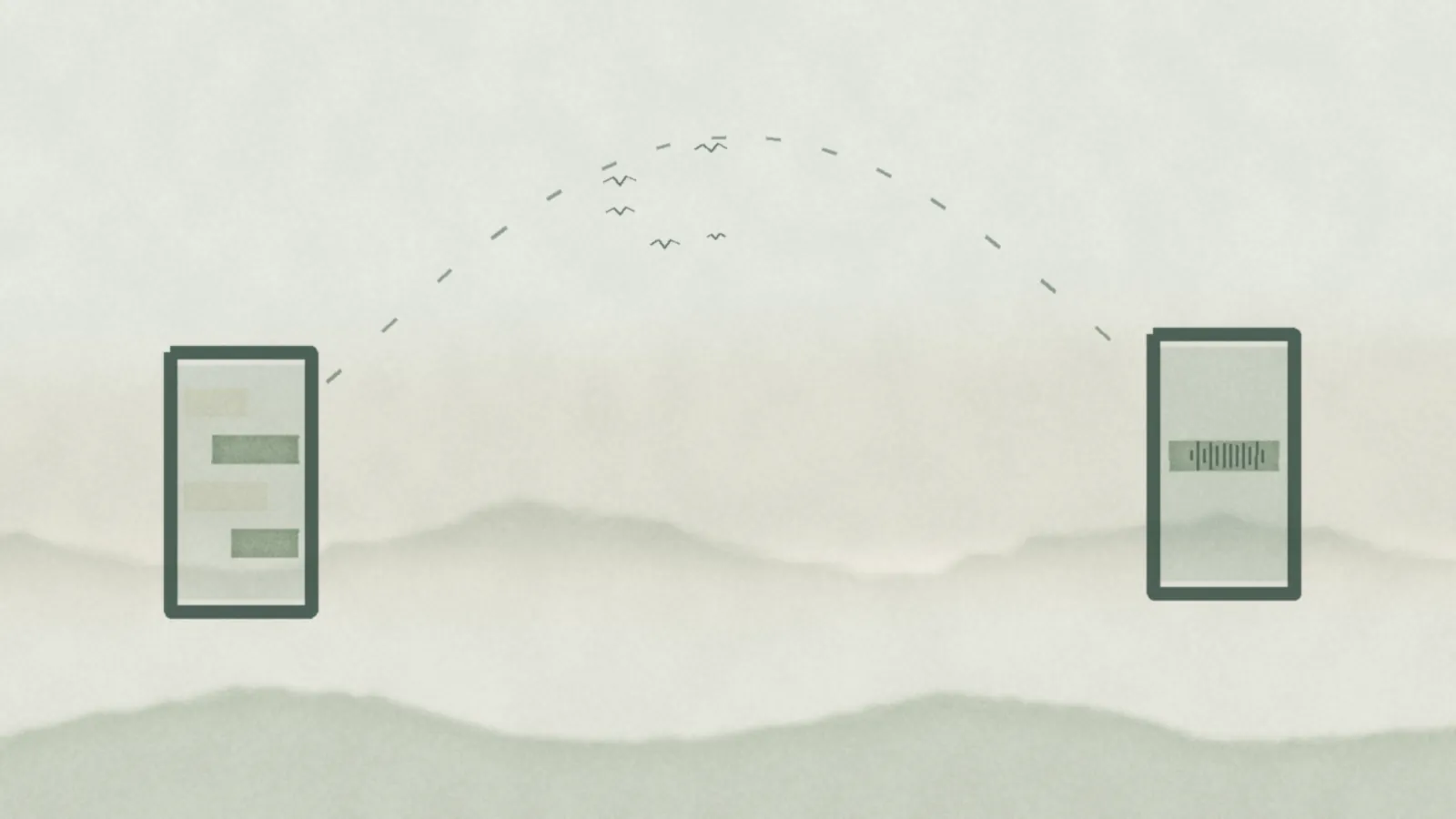
Not every exchange needs to be live. Asynchronous messages, like voice notes, photos and short videos, let friends connect whenever they have a moment:
- Send a photo of something ordinary with a specific question: “Remember this song from the bus? What were we always singing after it?”
- Share a picture of what you're cooking and ask for their mother's version.
- Record a one-minute voice note on your walk to work.

Specific questions are easier to answer than “How are you?” and often spark the best conversations.
Agree on low-pressure rules
Explicitly agree that:
- voice notes can be short,
- replies can come days later without apology,
- silence doesn't mean the friendship is over.
This takes away the guilt that often makes people avoid reaching out at all.
Keep live calls for what needs back-and-forth
Save video or phone calls for things that need real conversation: big news, hard times, celebrations. Even a call every couple of months, planned around everyone's time zones, can keep a friendship feeling alive.
Let them know your life now
Friendships fade when people only know each other's past. Let your friend into your present: record a short walk through your neighbourhood for their birthday, show them your favourite café, introduce them to a new friend on a call. Ask about their current life too, including the people and places you don't know.
Make new friends without replacing old ones
Building friendships where you live doesn't betray old ones. Local connections matter for wellbeing [2], and they can take some pressure off long-distance friendships, which then don't have to carry everything.
When loneliness takes over
If you feel persistently lonely, sad or isolated, please reach out to someone, whether a friend, a doctor or a support group. Loneliness is common after migration, and it's not a personal failing. See our support resources page.
Questions people often ask
How do you keep a long-distance friendship alive?
Use a mix of low-pressure messages and occasional live calls, ask specific questions, and agree that slow replies are fine. Sharing your present life, not only memories, keeps the friendship current.
Is it normal to drift apart from friends after moving abroad?
Yes. Some drift is natural when daily lives diverge. Many friendships survive with less frequent but meaningful contact, and some reconnect strongly years later.
What if my friend never replies?
Life may be overwhelming for them. Send one gentle, no-pressure message. If the silence continues, our article on one-sided friendships may help.
Connect with others far from their friends
In White Circle's Loneliness & Connection circle, Iranians abroad share how they keep old friendships going and build new ones. Explore our circles.
References
About this article. Written by the White Circle editorial team, which runs peer support groups for Iranians abroad on anxiety, low mood, relationships, divorce, grief and more. Last updated November 25, 2026. We link the research and health guidance we rely on in the references below.
This article shares general information and lived-experience perspectives. It is not medical advice, diagnosis or treatment, and peer support is not a substitute for care from a licensed professional.
Related support groups: